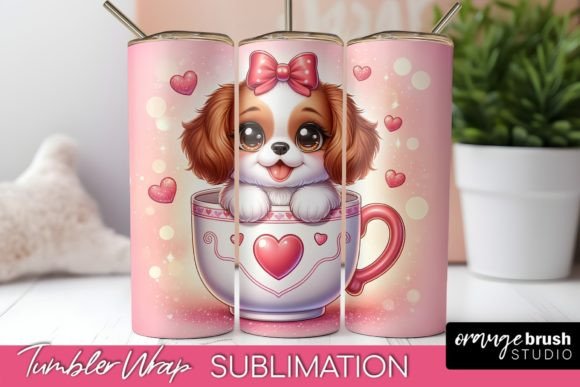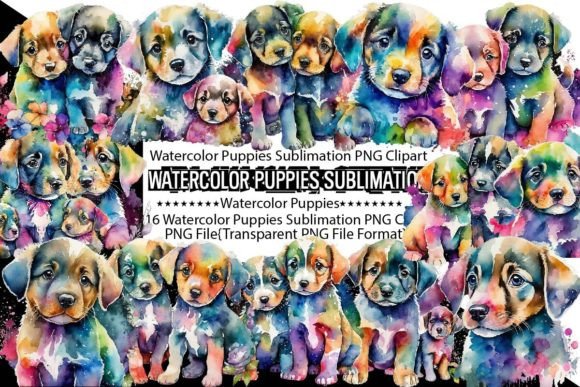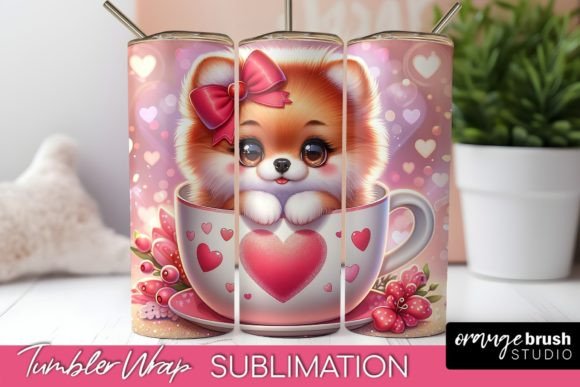
Valentines Day Dog Tumbler Sublimation
When I first opened this design file, I was looking at it through the eyes of someone who spends more time behind a sewing machine than a printer. As an embroidery designer who also works with sublimation blanks, I have learned to judge artwork by how well it travels between mediums. This Valentines Day Dog Tumbler Sublimation immediately struck me as a design with strong potential for real embroidery adaptation, even though it was originally built for a tumbler wrap. The mood is warm, playful, and sentimental without tipping into saccharine territory. The dog silhouette carries a natural charm that appeals to pet lovers, and the Valentine theme is handled with restraint. That matters when you are stitching a design onto apparel or home goods that need to feel thoughtful, not generic.
The layout is compact enough to work within smaller hoop sizes, but it also holds its own when scaled up for a sweatshirt back or a tote bag panel. The visual personality sits somewhere between cute and classy, which is a hard balance to strike in holiday-themed work. I have seen too many Valentine designs that lean either too childish or too romantic. This one lands in a sweet spot that works for dog owners of all ages. Whether you are stitching it onto a child's hoodie or a boutique apron for a craft fair, the design carries that handmade warmth that customers notice immediately.
Why This Design Deserves a Second Look from Embroidery Pros
Many sublimation designs do not translate well into embroidery because they rely on gradients, fine lines, or tiny text that gets lost in thread. That is not the case here. The shapes in this Valentines Day Dog Tumbler Sublimation are clean and readable, with good separation between elements. That makes it a solid candidate for an applique approach or a combination of satin and fill stitches. The dog outline alone could be turned into a beautiful standalone embroidered patch, stitched onto a denim jacket or a canvas tote. I have done similar adaptations with other pet-themed sublimation wraps, and the key is always whether the original artwork has enough clarity to survive the translation to thread. This one does.
The Valentine accents hearts, small decorative flourishes, and any lettering that may be present are spaced in a way that gives you room to work with stitch density. When I prepare a custom embroidered sweatshirt for a local boutique order, I usually take a design like this and test it on scrap fabric first. That is especially important when jumping from a digital sublimation file to an actual embroidery file. You need to verify that the thread colors match the mood of the original artwork. The warmth of pink and red thread on a cream or heather gray garment will echo the Valentine feel without clashing. On darker fabrics, you may want to use a lighter underlay or a white fill behind certain sections to keep the design popping.
Real Project Use: From Digital File to Finished Product
Let me walk you through a real scenario that happened just last week. I was preparing a batch of custom embroidered tote bags for a Valentine pop-up market at a local pet supply store. The customer wanted something that felt exclusive but not overly complex. I pulled up this Valentines Day Dog Tumbler Sublimation and studied how it would behave as an embroidered design on medium-weight cotton canvas. The dog shape has enough body to work well with a fill stitch, while the smaller accent elements could be handled with a satin stitch for a clean, raised finish. I tested it on a sample bag in cream fabric first, using red and soft pink thread for the heart accents and a warm charcoal gray for the dog outline. The result was clean, professional, and exactly the kind of thing that sells quickly at a craft fair.
I also tested it on a lightweight sweatshirt in a dusty rose color. Because the design is not overly dense, it did not cause the fabric to pucker or distort. That is a common issue when you take a design that was created for a rigid sublimation blank like a tumbler and try to stitch it onto something stretchy. This design handled the transition well. I used a medium-weight cutaway stabilizer and a slightly smaller hoop than I normally would for a chest placement. The design held its shape, the thread colors stayed crisp, and the finished product looked like it was always meant to be embroidered.
Where This Design Shines in Embroidery Work
This design is versatile enough to work across a wide range of products in a small shop or craft business. Here are some of the places where I think it performs best:
- Custom apparel: Sweatshirts, t-shirts, and hoodies with a chest or sleeve placement. The design scale fits naturally in those areas.
- Tote bags: Cotton canvas or linen totes for boutique or market sales. The design holds up well on medium-weight fabric.
- Embroidered patches: Stitch the dog silhouette as a standalone patch with a satin stitch border. Sew onto jackets, backpacks, or dog bandanas.
- Baby and kids items: Onesies, bibs, or small blankets. The design is cute without being overwhelming, and the stitch count is manageable for small hoop sizes.
- Holiday gifts and personalized products: Perfect for pet owners who want something unique for Valentine season. Works well as a gift item for dog lovers.
- Aprons and kitchen towels: Adds a handmade touch to boutique kitchen linens. Keep the stitch density moderate for items that will be washed frequently.
- Pillow covers and nursery decor: The design lends itself to decorative home accents. Use a slightly larger scale for a throw pillow.
- Small shop merchandise and Etsy listings: This design, when adapted into an embroidery file, can become a consistent seller in your shop. It photographs well for printable mockups and listing images.
Every embroidery project benefits from a design that reads clearly at a glance. Customers at craft fairs or on Etsy are making quick decisions about what feels handmade and professional. This design delivers that impression without needing excessive thread changes or complicated stitch sequences.
Where to Use Caution with This Design
No design is right for every surface, and this one has a few limitations worth noting before you commit it to a project. First, if you are working with very small hoop sizes think 4x4 or smaller you may need to simplify the design or remove some of the smaller accent elements. The dog shape itself is the strongest part of the composition, and focusing on that alone can actually make the final piece feel more polished. Second, textured fabrics like heavy knits, fleece, or thick terry can obscure fine details. I recommend testing on a scrap piece of the actual fabric before stitching the final product.
Stretchy fabrics require extra care. If you are stitching onto a jersey t-shirt or a stretchy sweatshirt cuff, use a stabilizer designed for knits and consider a light fusible interfacing on the back. The design does not have overly dense stitch areas, but any embroidery on stretch fabric benefits from proper preparation. Dark fabrics also present a challenge. The design relies on good contrast between thread and background. On black or navy fabric, use bright thread colors for the heart accents and consider a white or light gray underlay for the dog silhouette to keep it visible.
For curved surfaces like caps or baby onesies, the design needs to be placed carefully to avoid distortion around the curve. I would not recommend using this design on a cap front unless you resize it to fit the curvature and test the stitch-out first. Similarly, garments that will be washed frequently, like kitchen towels or baby clothes, need a dense enough stitch to survive laundering but not so dense that the fabric puckers. A medium fill stitch with a good stabilizer is your best bet.
How This Design Affects Product Value and Customer Trust
When you sell a handmade product featuring an adapted design, your customer is paying for thoughtfulness as much as craftsmanship. This Valentines Day Dog Tumbler Sublimation gives you a foundation that feels intentional. The dog motif connects emotionally with pet owners, and the Valentine theme adds seasonal relevance without feeling disposable. Products that feature this design especially when stitched with care communicate that you pay attention to detail. That builds trust. Customers remember when a design fits well, stays crisp after washing, and looks like it belongs on the product.
For Etsy sellers and small shop owners, this design also works well in printed mockups. Even before you stitch the first sample, you can create listing images that show the design on a tote bag or sweatshirt. That helps gauge customer interest before you invest time in production. Just be sure you have the proper licensing for both the original sublimation file and any embroidery file you create from it. I always recommend checking the license terms that come with a digital download before using it in commercial projects or finished products for sale.
Practical Designer Notes for Embroidery Adaptation
Before you digitize this design or hand it off to a digitizer, here are the practical checks I run through every time I adapt a sublimation design for embroidery:
- Test on scrap fabric first. Stitch a sample on fabric similar to your final product. Check stitch density, thread tension, and detail clarity.
- Review thread color contrast. Hold thread colors against your fabric in natural light. What looks good on screen may not pop on fabric.
- Confirm hoop size. Measure the design at your intended scale and make sure it fits your hoop with room for the stabilizer and fabric layers.
- Inspect small details. If any element is thinner than about 2mm at the stitch stage, consider simplifying or removing it.
- Test in black and white. A grayscale print of the design helps you see which areas rely on color contrast rather than shape clarity.
- Compare light and dark fabric backgrounds. The same design may need different thread colors or underlay settings on different fabric colors.
- Use proper stabilizer. For this design, a medium-weight cutaway stabilizer works well for most fabrics. For stretchy fabrics, add a layer of fusible interfacing.
- Check licensing. The original product is a digital download for sublimation use. Confirm whether you are allowed to create an embroidery file from the artwork for commercial sale. If the license does not cover that, contact the seller or create your own original derivative design.
These steps might sound like overkill, but they save you from stitching a full production run only to discover that the thread breaks mid-design or the fabric puckers around a dense section. I have learned this the hard way more than once. Take the extra twenty minutes to test, and your finished products will look like they came from a professional studio.
Final Thoughts on Adding This Design to Your Project Library
If you are an embroidery designer, small business owner, or Etsy seller looking for a Valentine-themed design that actually works in thread, this Valentines Day Dog Tumbler Sublimation deserves a serious look. It is not just a tumbler wrap. It is a well-composed piece of artwork that, with a little adaptation, can become a staple in your custom apparel and handmade product lineup. The dog silhouette is timeless, the Valentine accents are tasteful, and the layout gives you flexibility for different product types and hoop sizes. Treat it like a starting point, test it thoroughly, and let your stitching do the rest. That is how you turn a digital file into a finished product that customers love.
Whether you are embroidering a personalized tote bag for a boutique client, stitching a batch of dog-themed sweatshirts for a holiday market, or creating embroidered patches for your Etsy shop, this design holds up under real use. It has the clarity, spacing, and mood that make for successful embroidery projects. Pair it with good stabilizer, thoughtful thread choices, and proper hoop sizing, and you will have a product that looks handmade in the best sense of the word.